Featured
Table of Contents
The phase is separated right into 3 sections: (1) kinds of psychological tests, (2) psychometric residential or commercial properties of examinations, and (3) examination customer qualifications and management of examinations. Where possible an initiative has actually been made to attend to the context of handicap resolution; nonetheless, the phase is primarily an intro to psychological screening.
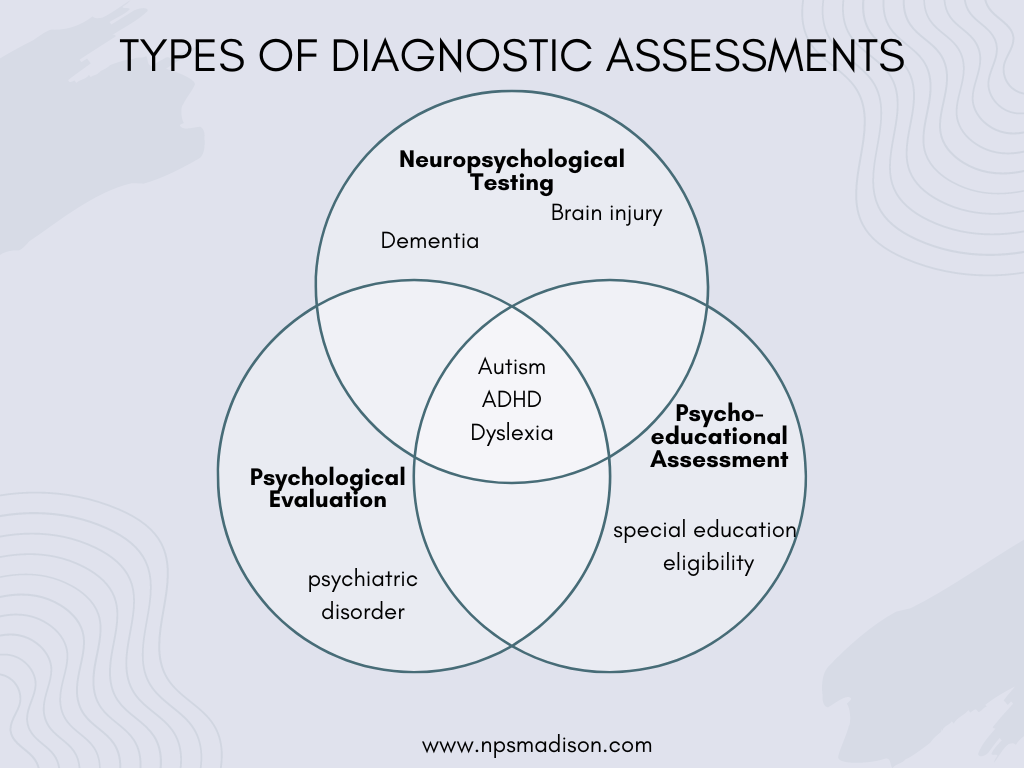
The taking place discussion lays out a few of the distinctions among such examinations; however, it is essential to keep in mind that there is no one proper cataloging of the types of tests since the various categorizations often overlap. Mental examinations can be classified by the very nature of the behavior they examine (what they gauge), their management, their scoring, and just how they are used.
Procedures of typical habits, such as personality, interests, worths, and attitudes, might be referred to as non-cognitive measures. An examination of ultimate performance, obviously sufficient, asks people to address concerns and fix issues as well as they perhaps can. Due to the fact that examinations of topmost performance commonly involve cognitive efficiency, they are usually described as cognitive tests.
Non-cognitive procedures rarely have right solutions per se, although sometimes (e.g., work tests) there may be favored feedbacks; cognitive tests virtually constantly have items that have proper answers. It is with these 2 lensesnon-cognitive measures and cognitive teststhat the committee takes a look at emotional screening for the objective of handicap analysis in this report.
Treatment Completion of Psychodynamic Treatment for Integration
An organized personality action, for instance, may ask people true-or-false inquiries about whether they take part in numerous tasks or not. Those are highly structured inquiries. On the various other hand, in carrying out some generally used personality procedures, the supervisor offers an unstructured projective stimulus such as an inkblot or a photo.
The premise of these projective actions is that when offered with ambiguous stimuli an individual will project his/her hidden and unconscious motivations and attitudes. The racking up of these latter actions is typically extra intricate than it is for structured actions. There is fantastic selection in cognitive tests and what they gauge, therefore needing a lengthier explanation.
Both kinds of examinations involve finding out. Accomplishment tests commonly involve finding out from extremely specialized education and learning and training experiences; whereas, a lot of ability examinations examine learning that has actually taken place in one's setting.
Comparing Psychodynamic Therapy from Humanistic Therapy in Chicago
On the other hand, one can also have a vocabulary test based on words one finds out only in an academic setup. Knowledge examinations are so widespread in several clinical psychology and neuropsychology situations that we also consider them as neuropsychological steps. Some capacities are gauged using subtests from knowledge tests; for example, particular working memory tests would certainly be a typical example of an intelligence subtest that is made use of one by one too.
Some ability tests are broken into spoken and performance tests. Spoken tests, undoubtedly enough, make use of language to ask inquiries and demonstrate solutions.

Efficiency examinations are additionally often used when the test-taker does not have competence in the language of the testing. Many of these examinations assess visual spatial tasks.
An absolutely speeded examination is one that everyone can obtain every question correct if they had enough time. Some examinations of clerical skills are precisely such as this; they may have 2 checklists of combined numbers, for example, where some pairings include two the same numbers and various other pairings are different. The test-taker simply circles the pairings that are identical.
Emotional Processing and Psychodynamic Treatment for Parent Guidance
A real power examination is one where all test-takers have adequate time to do their finest; the only question is what they can do. Certainly, few tests are either purely sped up or totally power examinations.
When test-takers have handicaps that affect their capacity to reply to questions promptly, some steps offer added time, relying on their function and the nature of the attributes being assessed. Questions on both success and ability tests can involve either recognition or free-response in answering. In academic and knowledge examinations, recognition examinations usually consist of multiple-choice concerns where one can search for the correct answer among the alternatives, recognize it as right, and choose it as the correct answer.

Latest Posts
Loss Work Through Group Therapy
Building Support Systems complementing Professional Family Therapy
How Internal Family Systems Benefits Parenting